

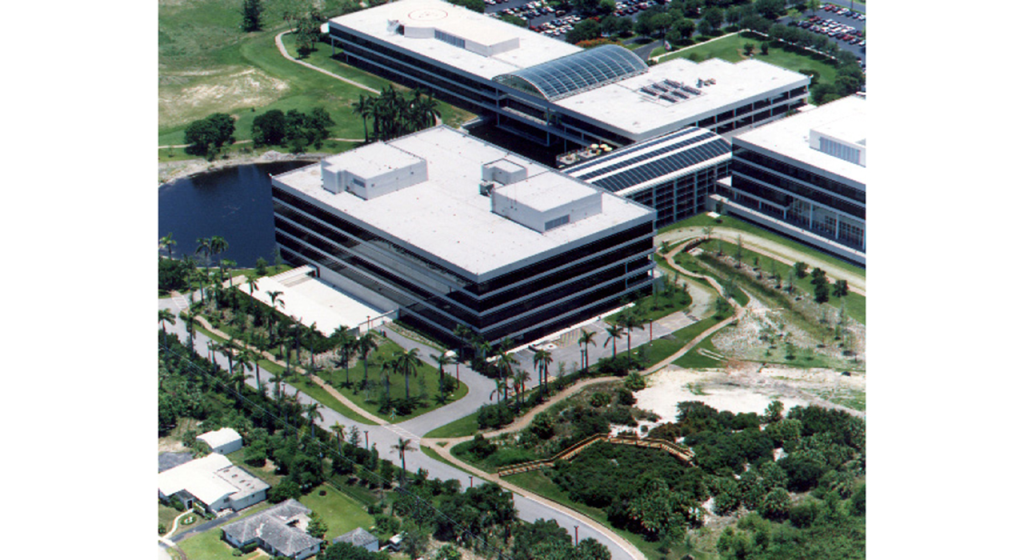
The FPL voluntary annexation in Indiantown, Florida, was a significant expansion approved in early 2026 to facilitate infrastructure and potential industrial development, including power-related projects.
Key Details
- Size and Approval Date: The annexation added 5,722.30 acres to the Village of Indiantown. It was a voluntary petition by Florida Power & Light (FPL), the landowner, and approved by the Village Council on January 22, 2026 (Ordinance No. 01-2026).
- Location: The land lies north and south of Southwest Kanner Highway west of Southwest Warfield Boulevard, and immediately south of the existing village boundaries. This places it in western Martin County, in a largely rural/agricultural area contiguous to Indiantown.
- Purpose: FPL requested the annexation primarily to support building a substation and related utility infrastructure. The move expanded Indiantown’s land area by about 62%, potentially generating additional tax revenue for the village.
- Zoning and Comprehensive Plan Changes: Following annexation, the Village Council unanimously approved a comprehensive plan amendment (future land use map change) on or around February 2026 to align the land with development goals. This rezoned portions for Planned Unit Development (PUD) and light-industrial uses, enabling major power generation, utilities, substations, and compatible industrial activities (e.g., data centers or similar high-energy users). The PUD framework provides flexibility for large-scale projects while requiring site-specific approvals.
- Process and Opposition:
- The Planning, Zoning, and Appeals Board (PZAB) recommended approval prior to council votes.
- Some residents opposed it, citing concerns over agricultural land loss, environmental impacts, and rural character preservation.
- It complied with Florida Statutes §171.044 (voluntary annexation) and no business impact estimate was required due to exemptions (e.g., initiated by a private party).
- Link to Data Centers: While the annexation itself is FPL-driven for power infrastructure, the expanded industrial/PUD zoning in this corridor (near SR 710, Fox Brown Road, and 609) creates a pathway for high-energy users like data centers. Officials have emphasized that any such projects (including Silver Fox and others) must be self-sufficient on water/power, with developers covering new generation/substation costs to avoid burdening ratepayers.
This annexation positions Indiantown as an emerging hub for energy-intensive development in the Upper East Coast area, tied closely to FPL’s grid enhancements. No full development plans for specific non-FPL projects (beyond Silver Fox pre-app) are tied directly to this land yet, but the zoning enables them.
Viewing a Map
No high-resolution public map of the exact post-annexation boundaries or the blue/red overlay (current village in red, annexed in blue) is directly linked in recent articles or agendas, but several reliable sources point to interactive or official maps:
- Village of Indiantown Interactive Map (ArcGIS-based) This is the best starting point — it includes current village boundaries, parcels, zoning, and future land use. Since the annexation was in early 2026, the map should reflect updated boundaries (or check layers for recent changes). Direct link: https://www.arcgis.com/home/search.html?q=tags%3A%22Village+of+Indiantown%22 (look for “Village of Indiantown Interactive Map” or similar apps; zoom to Indiantown and toggle boundary/zoning layers). Alternative: The village’s planning page links to it at https://www.indiantownfl.gov/planning-development/page/village-indiantown-interactive-map.
- Martin County GIS / Open Data Portal Martin County’s public GIS hub has parcel, future land use, and zoning maps that cover Indiantown (including post-annexation updates). Search for Indiantown area and layer on boundaries or recent annexations.
- Main portal: https://data-mcgov.opendata.arcgis.com/ (explore layers for municipal boundaries, parcels).
- Proposed developments map (includes Indiantown area): https://experience.arcgis.com/experience/b1364d1c59e44fdb9189918c8158816e.
- Future land use/zoning viewer: https://www.martin.fl.us/martin-county-services/view-land-use-and-zoning-maps (interactive; zoom to SW Kanner Hwy / Warfield Blvd intersection).
- Other Visual References
- A Facebook post from early 2026 (Indiantown Independence group) mentioned a map showing current boundaries in red and proposed annexation in blue — search that group or related posts for “FPL annexation map” if you’re on FB.
- Village agendas (e.g., on https://indiantown.novusagenda.com/) often attach Exhibit A/B maps or legal descriptions for Ordinance 01-2026 — check meeting packets from Jan/Feb 2026 for the annexation item.
Zoom in on coordinates roughly around 27.05°N, -80.50°W (central Indiantown) and head west/south along Kanner Hwy/Warfield Blvd to see the expansion — it’s a massive addition (~62% increase to village land area, from ~9,200 acres pre-annexation).
If the interactive maps don’t show the exact 2026 update yet (sometimes there’s a lag), contact Village Community Development Director Deanna Freeman at (772) 597-8269 — she handles these and can point to the official Exhibit maps from the ordinance.
This ties directly into our hydrology discussion: the annexed corridor (near Fox Brown Rd / 609 / 710) is where the three proposed data centers cluster, so drawdown risks concentrate there due to overlapping Floridan well fields.
FPL’s 2025–2034 Ten-Year Power Plant Site Plan (TYSP) is the official long-range planning document FPL submits annually to the Florida Public Service Commission (PSC). The current version was filed in April 2025 (covers 2025 through 2034) and is publicly available on the FPL and PSC websites. It’s a high-level forecast of generation needs, resource additions, transmission considerations, and preferred sites — not a detailed project list or commitment to every site.
Here’s the exploration, focused on what matters most for Indiantown and the three proposed data centers (Silver Fox + the two others in the FPL-annexed corridor):
1. Overall Resource Plan & Demand Growth
FPL projects steady load growth driven by population, economic expansion, EVs, and — crucially for your area — large industrial/high-load customers.
Key additions planned:
- 17,433 MW of new solar PV (bringing total solar to ~24,471 MW by 2034 — solar will rise from ~9% to ~35% of the energy mix).
- 7,603 MW of new battery storage (to handle evening/winter peaks and minimize solar curtailment).
- Minor combustion-turbine upgrades at existing plants + one new 475 MW gas unit in 2032.
- Reserve margins stay healthy (22–27% summer).
Demand drivers include:
- Household & economic growth.
- EVs adding ~2,500 MW to summer peaks by 2034.
- Energy-efficiency codes & DSM programs offsetting some growth.
2. Explicit Planning for Data Centers & Large Loads
This is the most relevant part for Indiantown’s proposed centers.
FPL states (page 47 of the detailed filing):
“However, based on discussions with potential large power users, such as data centers, FPL believes there is a high probability for customers with significant load requirements to be served on the FPL system beginning in 2028 with total load growing to approximately 732 MW by 2033.”
- This is treated as “high-probability” but not yet under binding contracts.
- It shows up in the industrial sales forecast — the fastest-growing segment (average 8.9% annual growth).
- By 2034 the data-center/large-load block could represent ~5,450 GWh annually.
- Important protection for existing customers: FPL’s policy (repeated in the plan and rate filings) is that these high-load users must pay 100% of any new generation, transmission, or substation costs they trigger — exactly the self-sufficiency requirement the Village imposed on the three data centers.
So the TYSP already anticipates the kind of demand your three centers would create (each ~100–300 MW depending on size/tech), and it’s baked into the planning starting 2028.
3. Local Ties to Martin County & Indiantown
- Existing assets in Martin County: FPL already operates several solar facilities here (Monarch Solar, White Tail Solar, Sweetbay Solar — each ~74.5 MW) plus the large Martin Combined-Cycle Plant (with upgrades scheduled in the plan).
- No specific mention of the new Indiantown substation (the one enabled by the January 2026 FPL annexation). The plan was filed before the full annexation details were finalized and doesn’t name every minor transmission project — but the substation fits squarely into FPL’s broader South Florida transmission strategy for interconnecting large loads and solar.
- No new solar or generation sites are listed for Martin County in this cycle (focus is on other South Florida counties like St. Lucie, Hendry, and Collier).
4. Bottom Line for Indiantown & the Three Centers
- The plan fully supports high-energy industrial development like your data-center cluster. It even forecasts exactly this type of load growth.
- The FPL annexation/substation was a proactive move that aligns with the TYSP’s transmission philosophy — bringing reliable power to the western corridor without raising costs for residential customers.
- With 1–3 centers: The 732 MW large-load forecast has plenty of headroom; FPL is already planning the grid reinforcements needed.
- No red flags or capacity constraints for western Martin County appear in the document.
If more data centers beyond the three emerge, FPL would simply update future TYSPs (they file every year). The next one (2026–2035) is due in April 2026 and will likely refine the large-load numbers based on actual commitments.
Here are the direct excerpts from FPL’s 2025–2034 Ten-Year Power Plant Site Plan (TYSP), pulled from the publicly available document filed with the Florida Public Service Commission in April 2025. The full PDF is accessible via FPL’s site (e.g., https://www.fpl.com/content/dam/fplgp/us/en/about/pdf/ten-year-site-plan.pdf) or the PSC portal.
These focus on the sections most relevant to our discussion: data centers/large loads, resource additions, and local/Martin County ties.
From Chapter II: Forecast of Electric Power Demand (around pages 41–54, with key load discussion)
The document discusses industrial sales forecasts, including emerging high-load customers.
Relevant excerpt (paraphrased context + direct quote from page 47):
“However, based on discussions with potential large power users, such as data centers, FPL believes there is a high probability for customers with significant load requirements to be served on the FPL system beginning in 2028 with total load growing to approximately 732 MW by 2033.”
- This appears in the industrial sales forecast section, noting the fastest-growing segment (~8.9% annual average growth).
- By 2034, the data-center/large-load block is projected to represent ~5,450 GWh annually.
- Emphasis: These loads are “high-probability” based on discussions but not yet under binding contracts. FPL’s policy (reiterated here and in rate filings) requires these users to cover 100% of incremental costs for generation, transmission, or substations — aligning with the self-sufficiency rule for Indiantown’s proposed centers.
From Executive Summary & Chapter III: Projection of Incremental Resource Additions (pages 5–81)
Key planned additions (direct from resource tables/summaries):
Key additions planned:
- 17,433 MW of new solar PV (bringing total solar to ~24,471 MW by 2034 — solar will rise from ~9% to ~35% of the energy mix).
- 7,603 MW of new battery storage (to handle evening/winter peaks and minimize solar curtailment).
- Minor combustion-turbine upgrades at existing plants + one new 475 MW gas unit in 2032.
- Reserve margins stay healthy (22–27% summer).
Demand drivers explicitly listed:
- Household & economic growth.
- EVs adding ~2,500 MW to summer peaks by 2034.
- Energy-efficiency codes & DSM programs offsetting some growth.
The large-load forecast (including data centers) is integrated into the industrial segment and has “ample headroom” for additions like your three centers (estimated 100–300 MW each, cumulative under the 732 MW projection by 2033).
From Chapter I: Description of Existing Resources & Local Ties (pages 18–40)
On Martin County assets:
Existing assets in Martin County include the Martin Combined-Cycle Plant (with planned uprates) and solar sites like Monarch, White Tail, and Sweetbay (~74.5 MW each).
No specific mention of the new Indiantown substation (from the 2026 annexation), as the plan predates full details — but it fits FPL’s South Florida transmission strategy for large-load interconnection.
No new generation sites are listed specifically for Martin County in this cycle (focus on other South Florida areas like St. Lucie, Hendry, Collier).
Overall Bottom Line from the Document
The TYSP explicitly anticipates and plans for data-center-scale loads starting 2028, with cost protections for existing customers and no red flags for western Martin County capacity. The FPL annexation/substation aligns as a proactive transmission enabler.Just like they should.
You have to ask – why the extra capacity in the area if the dATACENETRS are not on the future planning horizon ! Then what is?
 Talk About Martin
2 thoughts on “FPL Annexation and potential for more data centers”