
We could not get Bill Gates. I doubt if some would listen anyway. We for some reason are expected to have a higher standard of proof, so ……..
We will also have a conversation with a Woman, Ms. Jennifer, that was directly impacted after a data center was built in their community.
We will still have our other educated and experienced panelists with us as well. More information in the Video.
See ya’all on the 21st !
Meet Jennifer
https://mit-serc.pubpub.org/pub/the-cloud-is-material/release/2
….. To quell this thermodynamic threat, data centers overwhelmingly rely on air conditioning, a mechanical process that refrigerates the gaseous medium of air, so that it can displace or lift perilous heat away from computers.undefined Today, power-hungry computer room air conditioners (CRACs) or computer room air handlers (CRAHs) are staples of even the most advanced data centers. In North America, most data centers draw power from “dirty” electricity grids, especially in Virginia’s “data center alley,” the site of 70 percent of the world’s internet traffic in 2019.undefined To cool, the Cloud burns carbon, what Jeffrey Moro calls an “elemental irony.”undefined In most data centers today, cooling accounts for greater than 40 percent of electricity usage.undefined
While some of the most advanced, “hyperscale” data centers, like those maintained by Google, Facebook, and Amazon, have pledged to transition their sites to carbon-neutral via carbon offsetting and investment in renewable energy infrastructures like wind and solar, many of the smaller-scale data centers that I observed lack the resources and capital to pursue similar sustainability initiatives.undefined Smaller-scale, traditional data centers have often been set up within older buildings that are not optimized for ever-changing power, cooling, and data storage capacity needs. Since the emergence of hyperscale facilities, many companies, universities, and others who operate their own small-scale data centers have begun to transfer their data to hyperscalers or cloud colocation facilities, citing energy cost reductions. According to a Lawrence Berkeley National Laboratory report, if the entire Cloud shifted to hyperscale facilities, energy usage might drop as much as 25 percent.undefined Without any regulatory body or agency to incentivize or enforce such a shift in our infrastructural configuration, there are other solutions that have been proposed to curb the Cloud’s carbon problem. Some have proposed relocating data centers to Nordic countries like Iceland or Sweden, in a bid to utilize ambient, cool air to minimize carbon footprint, a technique called “free cooling.”undefined However, network signal latency issues make this dream of a haven for green data centers largely untenable to meet the computing and data storage demands of the wider world. ………..
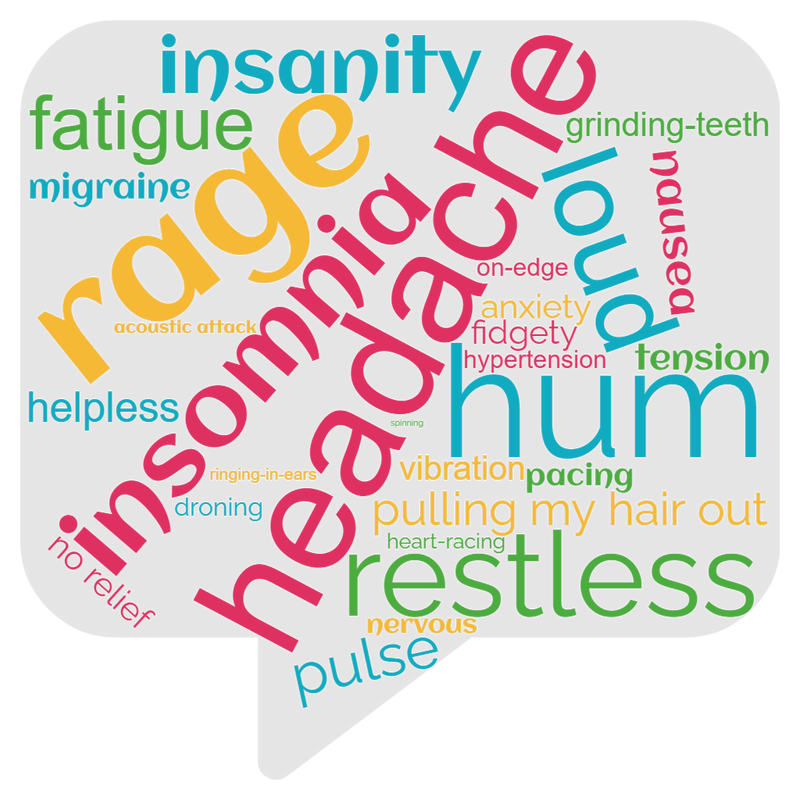
……. Over vast distances, the sonic exhaust of our digital lives reverberates: the minute vibrations of hard disks, the rumbling of air chillers, the cranking of diesel generators, the mechanical spinning of fans. Data centers emit acoustic waste, what environmentalists call “noise pollution.” For communities like Brenda’s and David’s, the computational whir of data centers is not merely an annoyance, but a source of mental and physical harm. Brenda, a nurse by training, reported an uptick in her blood pressure and cortisol levels with the onset of the noise. David, a twenty-something software engineer, was diagnosed with hypertension, and meets frequently with a clinical therapist to manage the anxiety caused by the data center’s hum.undefined……….
 Talk About Martin
2 thoughts on “New Speaker Steven Gonzalez an MIT Post Doctoral Expert on data centers and their health effects.”